

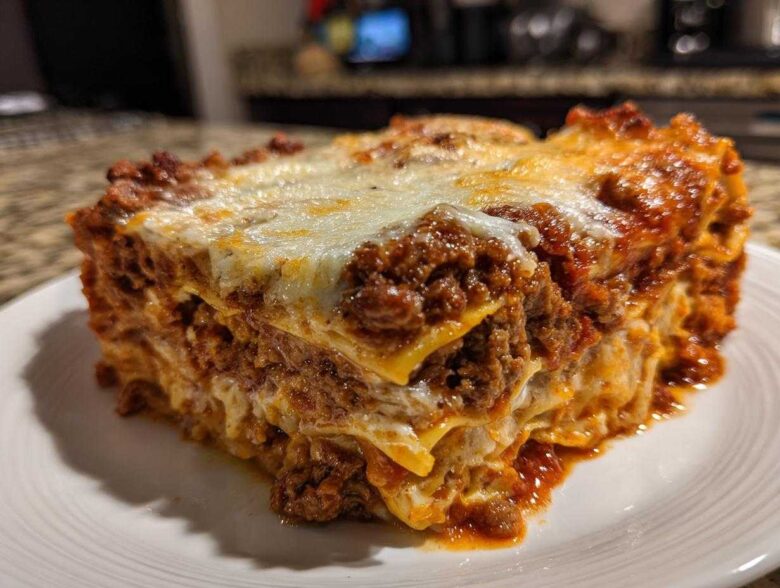
You know that feeling when you need real comfort food, something that smells like a hug and tastes like Sunday dinner? For me, that’s always Lasagna. Forget those quick fixes or dry, disappointing versions you sometimes find. I am thrilled to share my absolute favorite, most requested recipe with you today. Follow along, because after you try this, you won’t need another recipe to dive into the best homemade lasagna ever.
This Lasagna—the Classic Beef and Italian Sausage one—is the one my family requests every holiday and whenever someone needs cheering up. It takes a little time, trust me, but every rich layer of slow-simmered sauce and creamy cheese is worth the effort. I’m going to walk you through every single step, from making the sauce right to getting those perfect, slightly crisp edges. Seriously, get ready to make the best layered pasta bake of your life!
Why This is the Best Lasagna Recipe You Will Ever Make
I have to be honest; I’ve tried every shortcut out there for this Lasagna, and it just doesn’t work. The integrity of this dish relies on doing things the slow way. When you stick to these specific steps, you end up with an authentic Italian comfort food experience that sticks with you long after the dish is empty.
- The Meat Sauce: We simmer this thing for at least an hour. That’s non-negotiable! It deepens the flavor beyond what any jarred sauce can manage.
- The Cheese Balance: We use ricotta here, not cottage cheese most of the time, mixed just right with an egg to keep it from running everywhere when baked. It holds its shape beautifully.
- Noodle Perfection: Boiling them just to al dente means they finish cooking in the oven without getting mushy. No one wants soupy noodles in their layered pasta bake!
It’s this attention to detail that elevates this from a simple cheesy pasta casserole to true family tradition. If you’re looking for an easy weeknight lasagna, maybe check out my ravioli casserole hack, but for the real deal, you need this method.
Key Elements of Perfect Lasagna
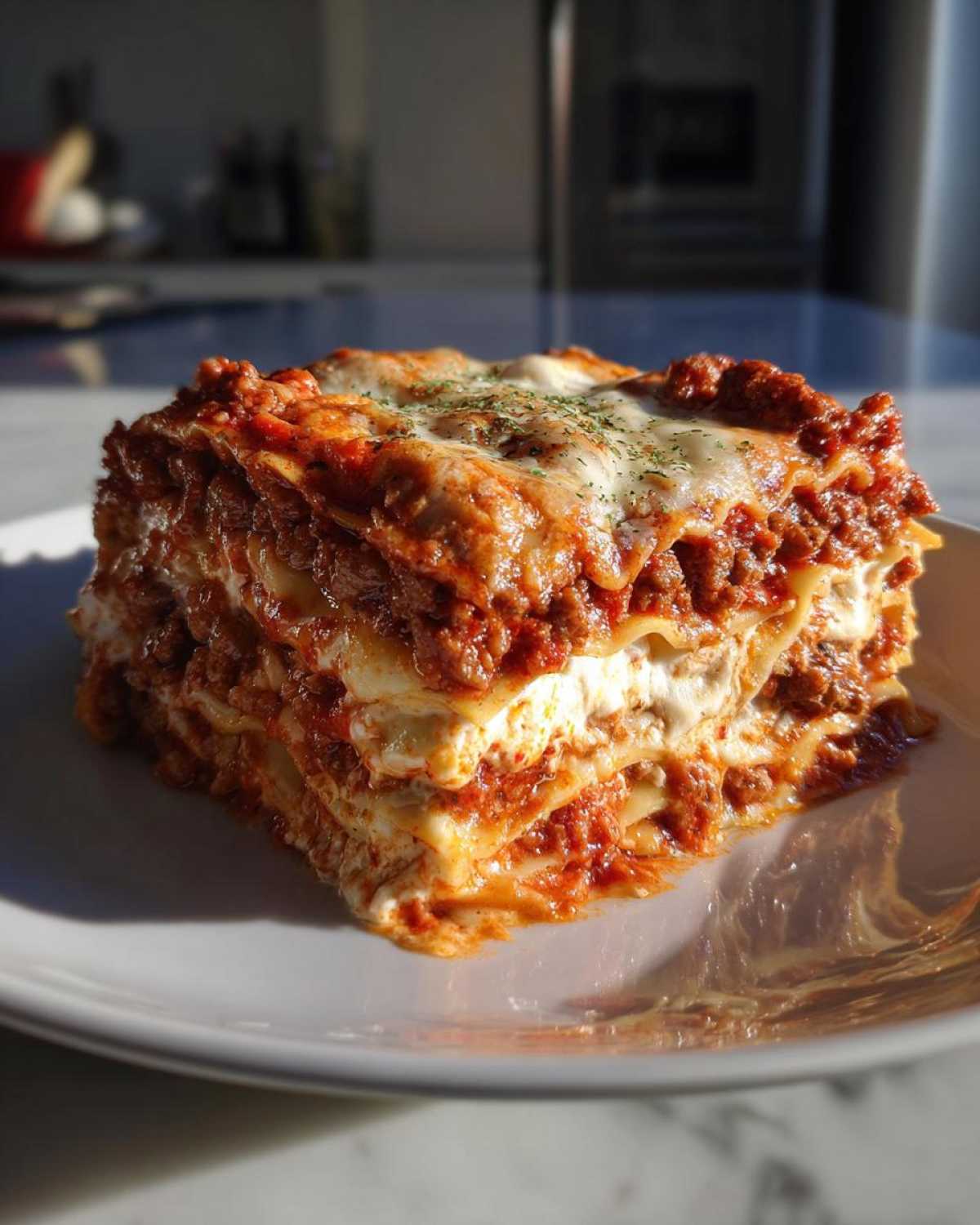
The slow-simmered sauce is the soul of this dish; it needs time for the herbs to bloom and the meats to tenderize. For texture, the ricotta filling must be creamy but firm. That little bit of egg acts as glue, making sure your cheese layers stay perfectly stacked and don’t just melt into one watery layer.
Gathering Ingredients for Your Classic Meat Lasagna
Okay, the hard part is over—you’ve committed to making the BEST lasagna! Now, let’s talk ingredients. I always lay everything out on the counter before I even turn on the stove. It keeps me calm because, let’s face it, this recipe has a lot of parts, and rushing only leads to mistakes.
For the sauce, you need richness, so we’re using both ground beef and Italian sausage! Make sure you remember to remove the casings from the sausage before you start cooking; nobody wants to fish those out later. I like to use fresh onion and garlic here—don’t skimp on the garlic, trust me.
When you look at the cheese filling, you’ll see ricotta, an egg (that’s our secret binder!), Parmesan, and fresh parsley. I always keep cottage cheese in mind as a substitution if someone is out of ricotta, but this version rocks the ricotta texture. Finally, for building it all up, you need a full pound of mozzarella. Get the shredded kind, but maybe grab a block for the very top layer—it melts prettier!
- 1 tablespoon olive oil
- 1 pound ground beef
- 1 pound Italian sausage, casings removed
- 1 large onion, chopped
- 4 cloves garlic, minced
- 2 (28 ounce) cans crushed tomatoes
- 1 (15 ounce) can tomato sauce
- 1/2 cup water
- 2 teaspoons dried basil
- 1 teaspoon dried oregano
- 1 teaspoon salt
- 1/2 teaspoon black pepper
- 1 (15 ounce) container ricotta cheese
- 1 large egg
- 1/4 cup grated Parmesan cheese, plus more for topping
- 2 tablespoons chopped fresh parsley
- 12 lasagna noodles
- 4 cups shredded mozzarella cheese
Lasagna Sauce Secrets: Building Flavor for Your Layered Pasta Bake
Forget the quick ten-minute sauce! If you want this Lasagna to sing, you have to give the sauce time to become truly special. Start by getting a good, deep brown crust on the beef and sausage right at the beginning. That flavor foundation is crucial. Once the meat is browned, add your onions until they sweeten up, and then toss in the garlic for just a minute—don’t let it burn, or the whole pot tastes bitter!
Then come the tomatoes, water, and all those gorgeous herbs like basil and oregano. Now, here is my big tip for true depth: if your crushed tomatoes taste a little too sharp or acidic, stir in a tiny pinch—maybe just an eighth of a teaspoon—of baking soda when you add them. It neutralizes the acid without making it taste weird. Then, cover it and let it simmer. I insist on at least an hour, but if you can let this meat sauce hang out on low heat for two full hours while you do other things, wow. That’s when you hit peak flavor for your layered pasta bake. For more inspiration on deep, slow flavor building, check out my approach to authentic slow-simmered bolognese sauce!
Preparing the Creamy Ricotta Cheese Lasagna Filling
While that sauce is bubbling away, you tackle the cheese mixture. In a separate bowl—use a nice big one—dump in your ricotta, your solitary egg, that small amount of Parmesan, and the fresh parsley. You just need to mix this until everything is *barely* combined. I mean it! Don’t over-mix this part. If you whip it too much, the egg incorporates too much air, and when it bakes, that beautiful ricotta layer turns spongy instead of staying delightfully creamy. Texture is everything in the final Lasagna stack.
Traditional Lasagna Instructions: Mastering the Assembly
Alright, darling, this is where the magic happens! We’re moving from component parts to glorious construction. First, make sure your 12 lasagna noodles are cooked perfectly—and I mean *al dente*. They should still have a little resistance when you bite them, because they are going to cook more in the oven. Drain them immediately and lay them flat on parchment paper so they don’t stick together into one giant pasta blob!
Now, grab your 9×13 dish. Start with a foundational slick of meat sauce on the bottom. This stops the first layer of noodles from scorching or sticking permanently to the glass. Place four noodles down edge-to-edge. Next, gently spread exactly half of that glorious ricotta mixture over the noodles. Don’t try to push it deep into the corners; just make a nice, even blanket. Sprinkle one-third of your mozzarella over that, and then spoon one-third of the remaining meat sauce on top of the cheese.
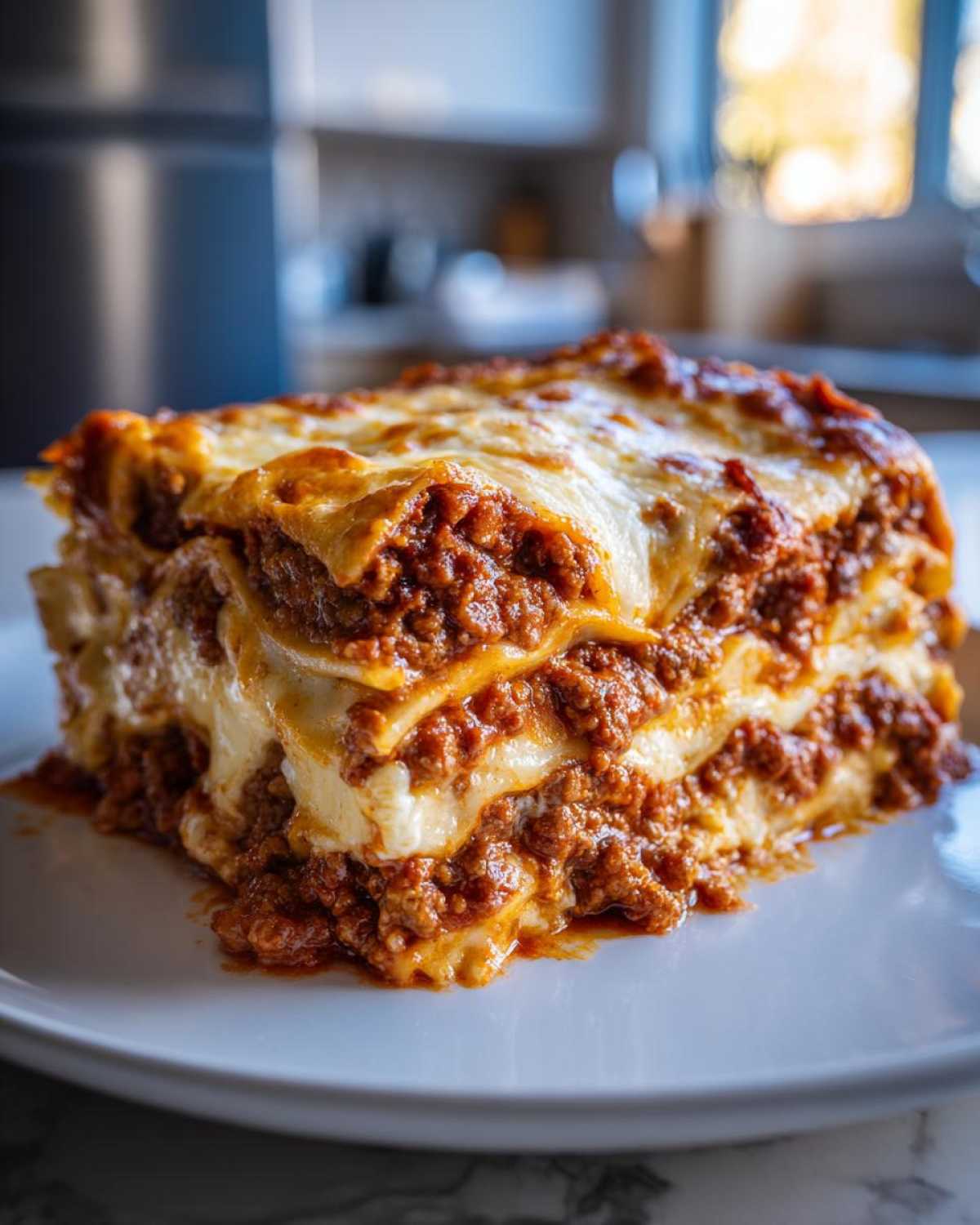
Repeat that sequence: four more noodles, the rest of the ricotta filling, another third of the mozzarella, and then another big scoop of sauce. For the very top, lay down your last four noodles. Cover these with the last of the sauce, and then rain down all the remaining mozzarella. If you want that lovely browned crust, sprinkle a final dusting of Parmesan cheese over the top. I love seeing how perfectly everything stacks up before it goes in the oven—it’s why I love this classic Lasagna! If you want a less traditional, faster assembly, you might want to check out my sheet pan lasagna idea, but this deep dish needs time.
Baking the Perfect Cheese Layers for Lasagna
Preheat that oven to 375°F (190°C). We bake this gorgeous thing uncovered first for 25 minutes. This gets the top layer of mozzarella nice and melty. Then, here’s another must-do: cover it loosely with foil and bake it for another 25 minutes. This steams the interior layers, making sure those noodles soften up perfectly and the cheese layers in the middle get hot and gooey without burning the top.
When you pull it out, it will look jiggly and slightly terrifying. Don’t touch it! You absolutely must let this Lasagna rest for at least 10 to 15 minutes on the counter. This resting time lets those beautiful cheese layers set up. If you slice it too early, it will ooze everywhere, and you’ll lose that structural integrity we worked so hard to build in the layering process.
Tips for Success When Making Classic Meat Lasagna
Making a great Lasagna isn’t just about following directions; it’s about avoiding those few little pitfalls that can ruin the whole experience. My number one tip, which I mentioned before, is managing moisture in that sauce. If your sauce looks thin when you take it off the heat, let it sit uncovered for ten minutes before layering—it will thicken up slightly just by cooling.
Also, when you cook those noodles, don’t just rinse them with cold water once they are drained. Toss them lightly with a teaspoon of olive oil. Seriously, it makes sure that when you lay them in the pan, they separate easily and don’t turn into one giant, sticky nest. Nobody wants to fight with their pasta sheets while building this masterpiece. A well-built Lasagna needs structurally sound noodles!
If you’re serving this alongside something heavy, try pairing it with something light like my simple lentil soup or a sharp green salad. Don’t forget: let it rest after baking!
Make Ahead Lasagna and Storage Instructions
Honestly, sometimes I wish I could clone myself, because sometimes I just don’t have time to assemble this entire beautiful Lasagna dish on a busy weeknight. The good news is, this recipe is absolutely perfect for making ahead. You can assemble the entire thing—sauce, cheese, noodles, everything—in the 9×13 dish just as we described. Once it’s assembled, cover it super tight with plastic wrap, pressing the wrap right down onto the top layer of cheese to prevent a skin from forming.
If you’re refrigerating it, let it chill for up to 24 hours. When you’re ready to bake it straight from the fridge, you must add about 10 to 15 minutes onto the baking time, especially the covered portion. You want to make sure that center gets piping hot!
For freezing, which I love doing for emergency family dinners—kind of like my meatloaf casserole prep—wrap the assembled dish tightly in two layers of foil. Freeze it solid. When you bake a totally frozen one, you might need nearly an hour covered and maybe another 35 minutes uncovered, but always test it in the center with a fork to make sure the noodles are done.
If you have leftovers (which is rare in my house!), this Lasagna keeps beautifully in the fridge for about four days. Reheat individual slices in the microwave or cover the whole dish loosely with foil and warm it in a 350 degree oven until warm all the way through. The flavor somehow gets even better the second day, if that’s even possible!
Serving Suggestions for Your Family Dinner Lasagna
You’ve made a showstopper here, so you don’t want to weigh everyone down with side dishes that fight your rich meat sauce. Keep it simple and fresh! A bright, crisp salad is my favorite complement. I always whip up a batch of my homemade dressing for the copycat salad because that tang cuts through the richness of the cheese perfectly.
And, of course, you need bread! Don’t bother with fancy rolls. Just slice up some crusty Italian bread, brush it with olive oil, and throw it under the broiler with some garlic powder. Perfect for mopping up any extra sauce left on the plate—and trust me, there will be sauce left!
Frequently Asked Questions About Homemade Italian Lasagna
Can I use no-boil lasagna noodles for this recipe?
Oh, the eternal question! You absolutely *can* use no-boil noodles if you’re in a massive pinch, but you have to adjust your sauce amounts. Since those dry noodles soak up a lot of liquid while baking, you need to make sure your meat sauce is slightly thinner than normal—maybe add an extra half-cup of water or plain tomato sauce to the pot. If you use them with my standard sauce recipe, your Lasagna might end up a little too dense. Use them sparingly, and make sure you cover it with foil for most of the baking time!
What cheese can I substitute for ricotta in lasagna?
If you’re completely out of ricotta, cottage cheese is the easiest swap for your Ricotta Cheese Lasagna filling. Just make sure you use the small curd kind if you can—large curd cottage cheese tends to leave bigger pockets of whey that can make the filling weep when baked. Some folks even blend the cottage cheese in a food processor until it’s smoother before adding the egg and Parmesan. If you have dietary needs, a smooth tofu blend or a cashew cream works surprisingly well for a vegetarian lasagna idea!
How do I prevent my lasagna from being watery?
This is the biggest fear when making any Layered Pasta Bake, isn’t it? Watery lasagna usually comes from two places: very watery sauce or raw vegetables releasing liquid. My recipe fixes the sauce issue by simmering it down, but if you’re adding vegetables like zucchini or spinach, you *must* sauté them heavily first and squeeze every drop of water out of the spinach before mixing it into the cheese. Nobody wants a soupy dinner! If you want truly amazing bread to go alongside, I have a great recipe for easy homemade garlic parmesan breadsticks.
Can I freeze this Traditional Lasagna Instructions?
Yes, this recipe is fantastic as a freezer-friendly lasagna! I usually assemble the whole thing, wrap it tightly in foil (and maybe a layer of plastic wrap over the foil), and toss it in the freezer. When you bake it later, skip the thaw; just add 15 minutes to the covered baking time in the oven. It comes out tasting just as homemade and authentic as the day you made it. If you love this dish, you should poke around my recipes for easy lasagna soup for a different way to enjoy these flavors!
Is this recipe suitable for a Deep Dish Lasagna?
This recipe is designed for a standard 9×13 dish, which already gives us a nice, thick bake. To make it true deep dish, you’d need a deeper pan, maybe a 3-inch high casserole dish. If you use a deeper dish, you’ll definitely need to add an extra layer of noodles and sauce, and be prepared to add about 15-20 minutes to your total covered baking time to ensure that center is bubbling hot. This is what makes it the ultimate Cheesy Pasta Casserole!
Estimated Nutritional Data for This Lasagna
Look, I’m a cook, not a nutritionist, so here’s the rundown based on the ingredients we used up. Remember that because this is a huge, homemade, authentic Italian comfort food masterpiece, the numbers reflect a generous slice. These estimates are based on 8 servings, and exact totals can change depending on the brand of sausage or how much cheese you sneak in while layering!
- Serving Size: 1 slice
- Calories: 550
- Fat: 30g
- Saturated Fat: 14g
- Carbohydrates: 45g
- Protein: 35g
- Sodium: 750mg
- Sugar: 12g
Enjoy every bite without worrying too much about the fine print. When you’re making the Lasagna this well, you’re already doing everything right!
PrintClassic Beef and Italian Sausage Lasagna
Follow these steps to make a rich, layered lasagna featuring a slow-simmered meat sauce and a creamy cheese filling.
- Prep Time: 30 min
- Cook Time: 1 hr 45 min
- Total Time: 2 hr 15 min
- Yield: 8 servings
- Category: Dinner
- Method: Baking
- Cuisine: Italian
- Diet: Vegetarian
Ingredients
- 1 tablespoon olive oil
- 1 pound ground beef
- 1 pound Italian sausage, casings removed
- 1 large onion, chopped
- 4 cloves garlic, minced
- 2 (28 ounce) cans crushed tomatoes
- 1 (15 ounce) can tomato sauce
- 1/2 cup water
- 2 teaspoons dried basil
- 1 teaspoon dried oregano
- 1 teaspoon salt
- 1/2 teaspoon black pepper
- 1 (15 ounce) container ricotta cheese
- 1 large egg
- 1/4 cup grated Parmesan cheese, plus more for topping
- 2 tablespoons chopped fresh parsley
- 12 lasagna noodles
- 4 cups shredded mozzarella cheese
Instructions
- Prepare the meat sauce: Heat olive oil in a large pot over medium heat. Add ground beef and sausage. Cook, breaking up the meat, until browned. Drain excess fat.
- Add onion and cook until soft, about 5 minutes. Add garlic and cook for 1 minute more.
- Stir in crushed tomatoes, tomato sauce, water, basil, oregano, salt, and pepper. Bring to a simmer, then reduce heat to low, cover, and cook for at least 1 hour, stirring occasionally.
- Cook the lasagna noodles according to package directions until al dente. Drain and set aside.
- Prepare the cheese mixture: In a medium bowl, combine ricotta cheese, egg, 1/4 cup Parmesan cheese, and parsley. Mix well.
- Preheat your oven to 375 degrees Fahrenheit (190 degrees Celsius). Lightly grease a 9×13 inch baking dish.
- Assemble the lasagna: Spread a thin layer of meat sauce on the bottom of the prepared dish.
- Arrange four cooked noodles over the sauce, slightly overlapping if necessary.
- Spread half of the ricotta mixture evenly over the noodles.
- Sprinkle one-third of the mozzarella cheese over the ricotta.
- Spoon one-third of the remaining meat sauce over the mozzarella layer.
- Repeat the layers: noodles, remaining ricotta, one-third of the mozzarella, and another layer of sauce.
- Top with the final layer of noodles, the remaining sauce, and the remaining mozzarella cheese. Sprinkle with extra Parmesan cheese.
- Bake uncovered for 25 minutes. Cover loosely with foil and bake for an additional 25 minutes, or until the cheese is melted and bubbly.
- Let the lasagna rest for 10 to 15 minutes before slicing and serving.
Notes
- For a richer sauce, simmer it for 2 hours instead of 1.
- If you prefer a smoother texture, use cottage cheese instead of ricotta, or blend the ricotta mixture slightly.
- To make ahead, assemble the entire lasagna, cover tightly, and refrigerate for up to 24 hours before baking. Add 10-15 minutes to the covered baking time if baking directly from the refrigerator.
Nutrition
- Serving Size: 1 slice
- Calories: 550
- Sugar: 12
- Sodium: 750
- Fat: 30
- Saturated Fat: 14
- Unsaturated Fat: 16
- Trans Fat: 1
- Carbohydrates: 45
- Fiber: 4
- Protein: 35
- Cholesterol: 95