

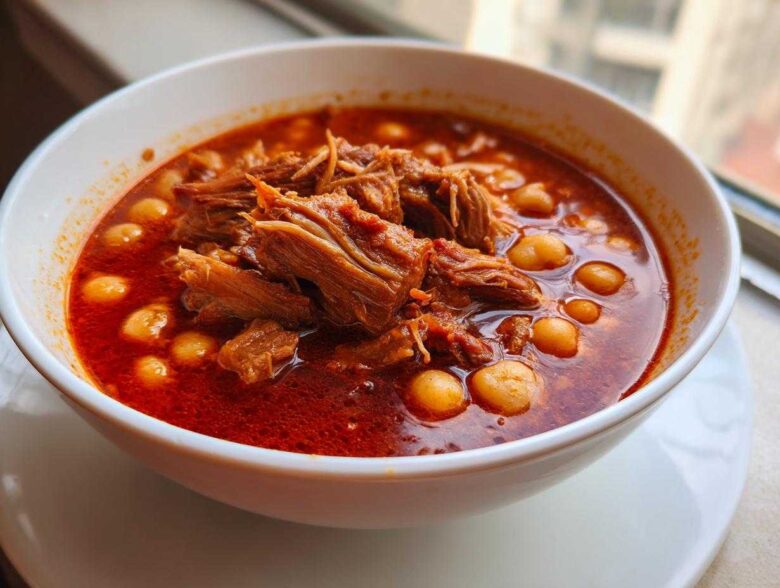
Oh, Mexican celebrations! There’s just nothing like gathering everyone around the table when the air gets cool, right? For our family, especially when Noche Buena rolls around or we have a big milestone, the absolute centerpiece—the dish that means we’re *really* celebrating—is a huge, simmering pot of Pozole. It feels ancient, doesn’t it? This isn’t just soup; it’s got roots going way, way back, and when you make it, you’re connecting to generations of tradition in one glorious bowl.
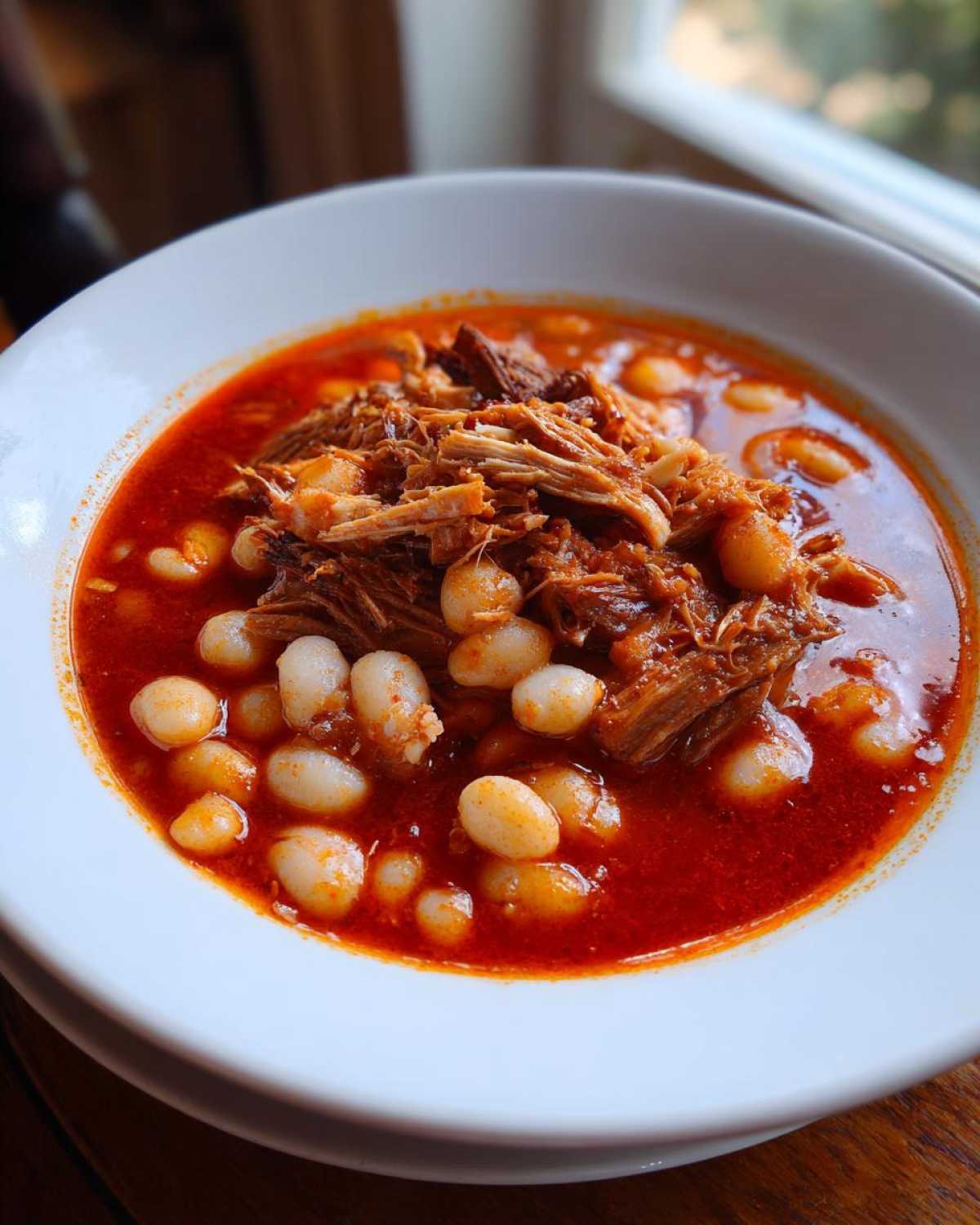
When I say “Pozole,” I mean the deep, rich, fire-red version: the Pozole rojo. Forget hurried weeknight versions you grab from a can. We’re talking about slow-simmered pork shoulder melting into a broth built from fragrant dried chiles. Trust me, this recipe is the keeper. We’re going step-by-step to make sure your Mexican hominy stew is soulful, vibrant, and absolutely unforgettable for everyone who sits down at your table!
Why This Authentic Pozole Rojo Recipe Works (Experience & Expertise)
Listen, I’ve tried quick recipes, and they just fall flat. This version of Pozole rojo isn’t about cutting corners; it’s about respecting the process so the final flavor just sings. It takes time, but every minute in that pot builds up the incredible warmth you want for a proper gathering. This is the recipe I proudly serve for our Christmas Eve pozole because it just tastes like tradition!
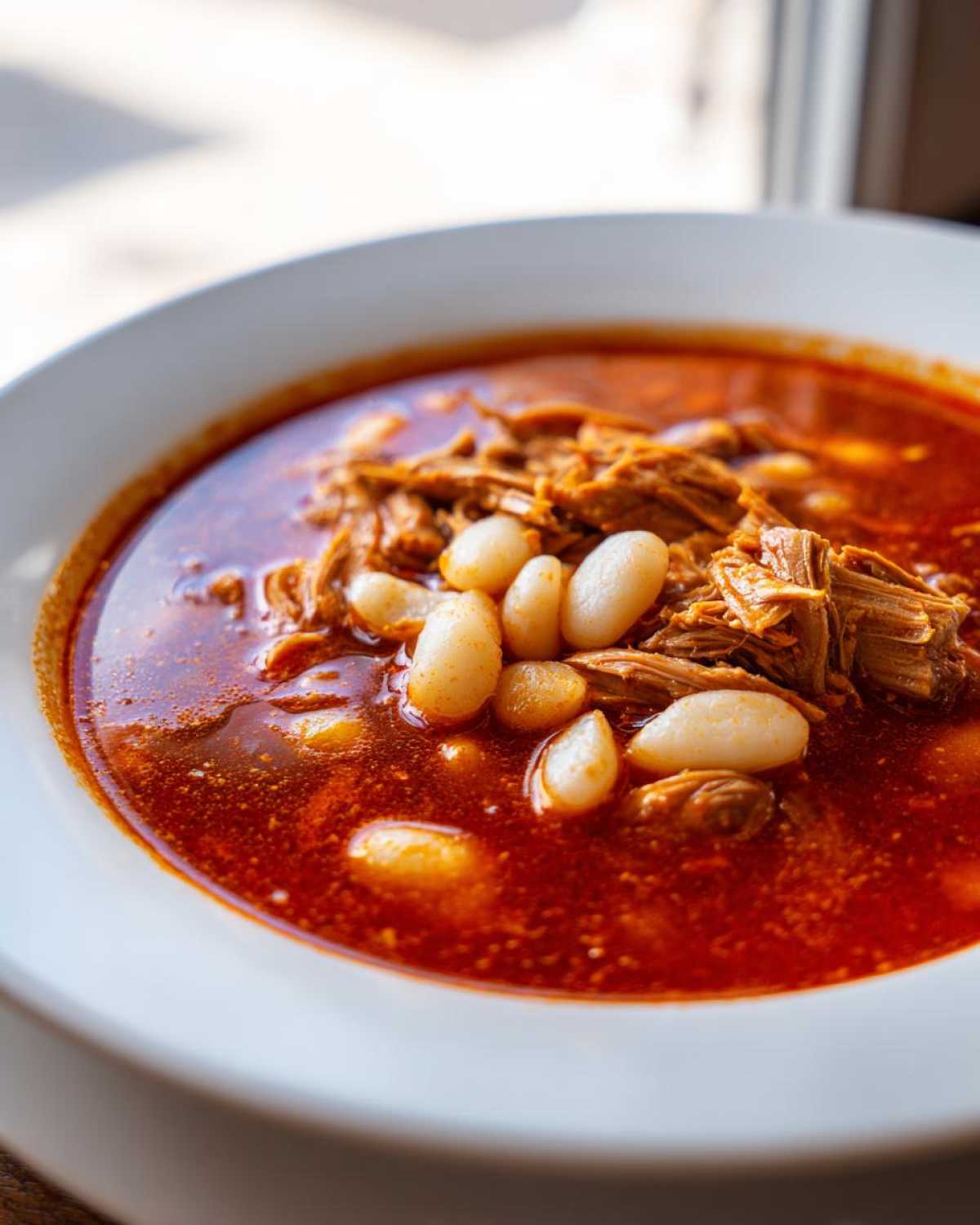
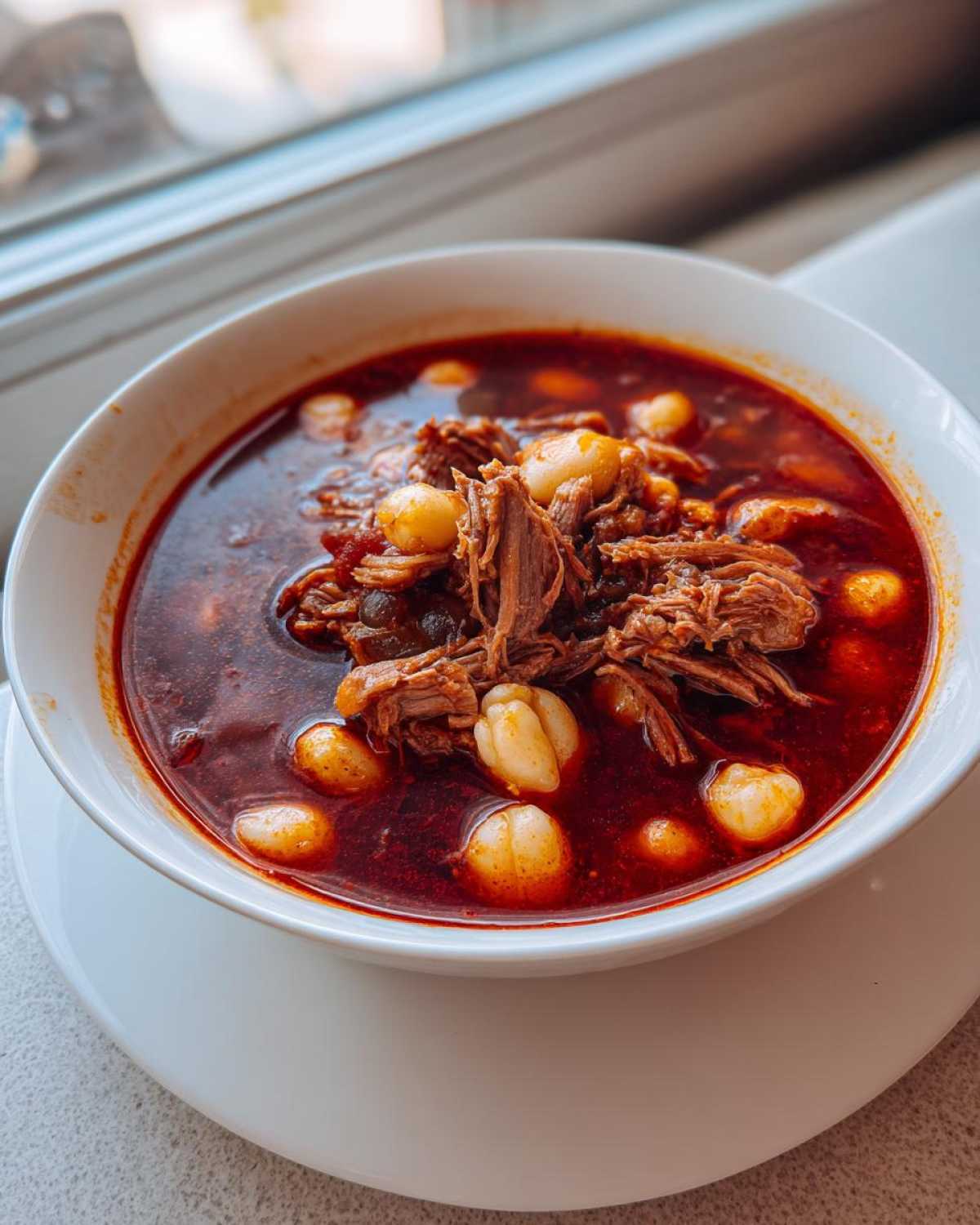
You get that amazing, fall-apart pork and a broth so deep red it looks luxurious. That beautiful color isn’t just luck; it comes from carefully prepping those dried chiles. We take the extra step to strain that chile sauce, and trust me, that’s the secret weapon for a silky, non-gritty broth that chefs dream about.
Key Benefits of Our Pozole Rojo Recipe
- The pork simmers until it’s genuinely “fork-tender”—no cheating on that simmer time!
- The broth gets its incredible depth by using a blend of guajillo and ancho chiles, giving you that signature robust flavor.
- Straining the chile paste ensures your final Mexican hominy stew is perfectly smooth and vibrant red.
- It’s built for big crowds, tasting even better the next day when the flavors really marry together.
Gathering Ingredients for Your Pozole Rojo
Okay, let’s talk about what you need to pull this off. When you’re making something this important, you can’t just throw things in! We need some specific stuff to get that authentic, rich Pozole rojo color and texture. Seriously, the dried chiles are non-negotiable; that’s where all that incredible, foundational flavor comes from. Don’t substitute them with powder, or it just won’t be the same magic!
Here is the list of what you need for a pot that will wow the whole family. Remember to chop that pork into nice, even 2-inch chunks so it cooks up evenly and gets perfectly tender:
- Three pounds of pork shoulder, cut into 2-inch chunks.
- One big 28-ounce can of white hominy, make sure you drain it really well and give it a rinse.
- One large white onion, halved—we use this for cooking the meat, so don’t worry too much about perfect dicing yet.
- Four cloves of garlic, peeled.
- One tablespoon of dried oregano.
- One teaspoon of cumin seeds.
- One lonely bay leaf.
- Salt, naturally, to taste later on.
- Now for the color: Twelve dried guajillo chiles, and you must stem and seed every single one of them!
- Four dried ancho chiles, also stemmed and seeded—these add body!
- Four cups of water, just for soaking those beautiful chiles later.
- And finally, the fun stuff: all your garnishes—shredded cabbage or lettuce, sliced radishes, chopped white onion, lime wedges, and some extra dried Mexican oregano sprinkled on top!
Ingredient Notes and Substitution Tips
About that hominy: the recipe calls for canned because it’s already nixtamalized and cooked, saving you hours! If you find dried *cacahuazintle* hominy, you can certainly use it, but you’ll need to cook it separately until it blooms open—that’s a whole other afternoon project, so if you’re new to this, stick to the can for your first go at this Pozole rojo recipe.
When you get your guajillo and ancho chiles, before you even think about soaking them, you absolutely must try toasting them! Just toss them in a dry, hot skillet for about 30 seconds per side until you can really smell that rich, earthy fragrance. Be careful not to burn them, or they turn bitter fast—a light toast is all you need. That little step really deepens the color and taste, ensuring your Pozole rojo looks and tastes exactly right for the holidays.
Step-by-Step Instructions for Perfect Pork and Red Chile Soup
Alright, this is the part where we turn those beautiful ingredients into the warm, soul-satisfying meal we’ve been dreaming of! Making this pork and red chile soup is just a series of logical steps, but you can’t rush the simmering parts. We start the pork cooking first because it takes the longest. Patience here equals unbelievably tender meat later, so keep your eye on the prize!
Once your pork is nearly done, we jump over to the chiles, which need a good, long soak to become pliable for blending. Don’t skip soaking them fully, or your blender is going to struggle, and you’ll end up with a chunky sauce—and nobody wants that when we are aiming for elegance in this Mexican hominy stew! It takes time, but if you’re curious about getting awesome depth in other bases, check out my guide on caramelized onions—it’s all about cooking low and slow!
Cooking the Pork for Tender Mexican Hominy Stew
First things first: get your pork chunks, half of that onion, two cloves of garlic, the oregano, cumin seeds, and the bay leaf into your biggest pot. You want enough water to cover the meat by about two inches, and don’t be shy with the salt now; the broth needs an initial seasoning base. Bring that noisy mess up to a rolling boil, then immediately drop that heat down low. We want a gentle simmer—just a slow, lazy bubble under the cover. This part takes time, usually 1.5 to 2 hours. You’ll see some little foam bits floating up at the start; skim those off during the first half-hour, that keeps your broth cleaner. The payoff? Your pork should be so tender you can just poke it with a fork and it falls apart!
Creating the Deep Red Chile Base for Pozole Rojo
While the pork is getting cozy, let’s tackle the heart of the color: those lovely soaked chiles. After they’ve softened up for about 30 minutes in simmered water, scoop those chiles—along with a cup of that soaking water—into your blender. Toss in the remaining onion half and the last two garlic cloves. Here’s where you blend until it feels impossibly smooth; you want that motor running until you think it can’t possibly get any smoother. Now, the most critical step for a luxurious broth: pour the whole mixture through a fine-mesh sieve into a separate bowl. Use the back of a spoon to press out every last drop of that gorgeous red liquid. Chuck the remaining solids; we only want the liquid gold!
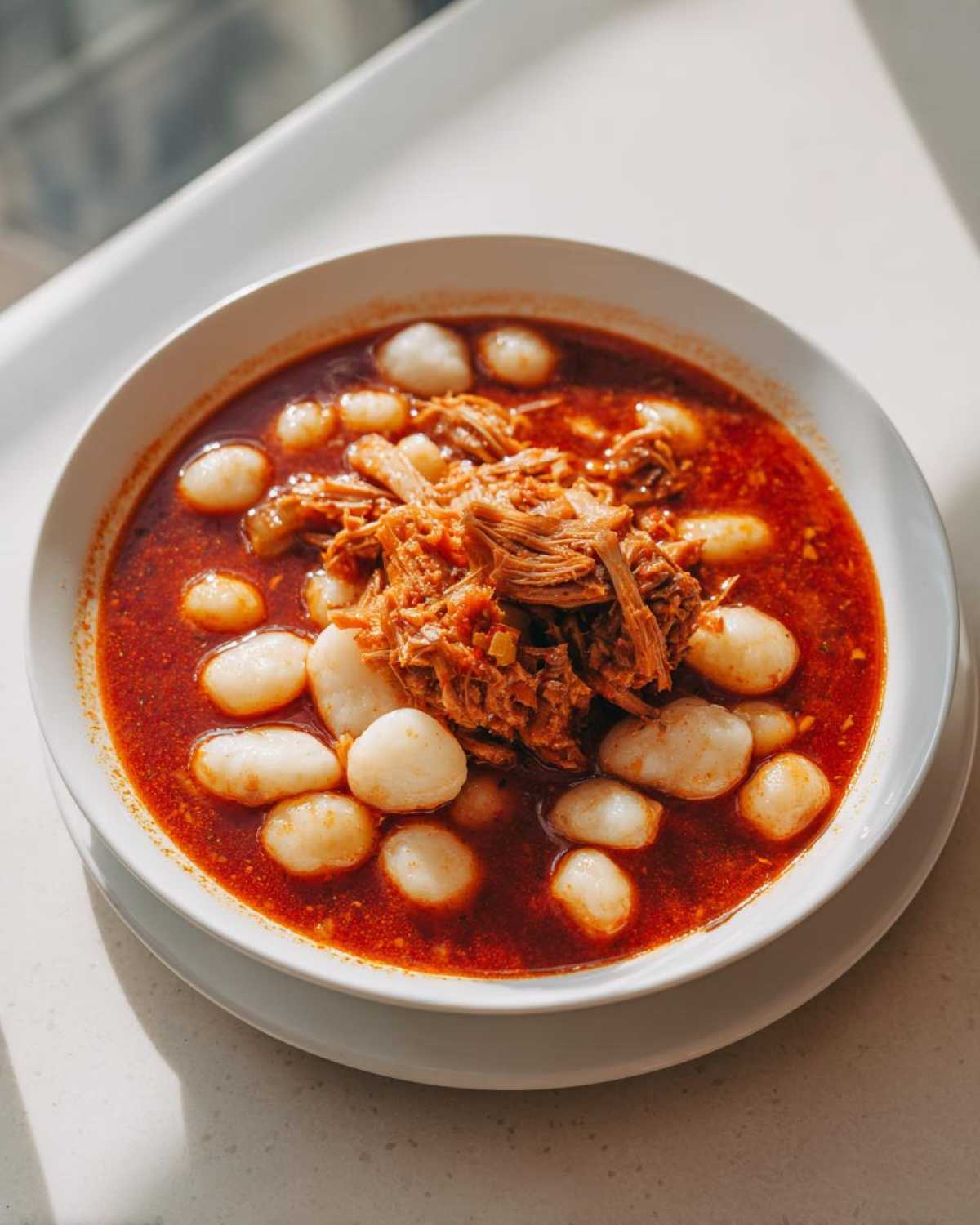
When the pork is tender, take it out and shred it up nicely with two forks. Strain the broth you cooked it in and toss out the solids—we want that clear, flavorful stock. Now, mix that beautiful strained chile sauce right into the clean broth. Everything goes back into the pot: the shredded pork and the drained hominy. Let it all simmer together for another 30 minutes. This lets the pork soak up the chile flavor. When it’s done, give it a quick taste. Does it need more salt? Maybe just a squeeze of lime juice at the very end can brighten everything up. That’s the final professional touch!
Essential Equipment for Making Pozole Rojo
You don’t need a fancy commercial kitchen for this, but a few good quality items make the whole process so much smoother. Honestly, gathering your tools beforehand is half the battle won! You absolutely need a nice big, large pot—you’re making a feast, so you need room for that pork to swim!
Then, of course, there’s the blender; this is non-negotiable for getting that sauce right. Grab your sturdiest blender. Don’t forget a good quality fine-mesh sieve for straining the chiles—this is how we get that upscale texture. And finally, you’ll want two sharp forks for shredding that soft pork!
Serving Suggestions for Your Festive Pozole Rojo
The best part about serving this amazing Pozole rojo recipe is that it’s interactive! Seriously, a huge pot of this Mexican hominy stew is just the base. You have to set out bowls piled high with all the traditional garnishes. This lets everyone at the table customize their bowl exactly how they love it—some people load up on the crunch, and others need gallons of lime juice, you know?
You absolutely must have freshly shredded cabbage or crisp lettuce ready. Sliced radishes give that perfect little peppery bite that cuts through the richness of the pork and chile. Set out bowls of freshly chopped white onion, plenty of lime wedges for squeezing (it wakes everything up!), and don’t forget some dried Mexican oregano to crumble over the top right before eating. If your guests want extra crunch, I even have a fantastic crunchy vinaigrette cabbage salad recipe they could borrow that might work here too! It’s all about making that celebratory bowl yours.
Storage and Reheating Your Pozole Rojo
One of the nicest things about making a big pot of Pozole rojo is that you get leftovers! Score! The best news is that this stew actually tastes even better the next day once those chile flavors have had a chance to really settle in and mingle. When you’re putting it away, make sure you store the stew itself—pork, broth, and hominy—in an airtight container in the fridge. Don’t store any of your lovely garnishes with it, though!
When you’re ready to enjoy it again, the stovetop is always the best way to reheat. Just warm it slowly over medium heat, giving it a gentle stir now and then until it is steaming hot all the way through. If it seems a little too thick the next day, don’t panic! Just add a splash of water or a tiny bit of chicken stock to loosen it back up to your preferred consistency. See? Easy peace of mind for leftovers!
Frequently Asked Questions About Pozole Rojo
It’s totally normal to have questions when you’re diving into a traditional recipe like this! I get asked about the chiles all the time, or people wonder if they can swap out the meats. I’ve gathered the top questions I always hear about making the perfect Pozole rojo. Here are my best answers so you can serve this with confidence!
What makes the broth red in Pozole rojo?
Ah, the color! That gorgeous, dramatic red color comes almost entirely from the dried chiles we use—specifically the guajillo and ancho chiles. When you soak them and blend them into that smooth paste, they release this incredible pigment and deep, earthy flavor. It’s not spicy red; it’s a rich, savory red. Toasting them first, like I mentioned earlier, really wakes up that color, too, so don’t skip that little step!
Can I use chicken instead of pork for this Mexican hominy stew?
You absolutely can! If pork shoulder isn’t your preference, chicken breast or even turkey works fine to create a Mexican hominy stew. Just be aware that the depth of flavor changes a bit. Pork shoulder has fat that melts into the broth, creating that signature unctuous mouthfeel we love. If you use chicken, you might want to cook it a little less time—about an hour—and maybe add a tiny bit more toasted cumin when you cook the meat to boost the savory notes.
How far ahead can I prepare the chile sauce?
This is my favorite organizational secret! You can totally prepare the chile sauce way ahead of time. I usually make a massive batch of the strained pork and red chile soup base about two days before the party. Store the strained chile mixture in an airtight container in the fridge. When you’re ready to cook, just simmer it with your broth and hominy, simmer less time since the flavors are already developed, and then add your cooked pork. It takes major stress off the day you want to serve your Christmas Eve pozole!
Nutritional Estimate for Pozole Rojo
Whenever I make a big pot of Pozole rojo, I know it’s hearty, but I also like to have a general idea of what we’re digging into. This is such a fantastic dish because it’s packed with protein from the slow-simmered pork and fiber from the hominy and chiles. It really feels like a wholesome, warming meal, especially when you load up on those fresh vegetable garnishes we talked about!
Just remember, these numbers are based on the recipe provided, and they are just estimates, okay? If you decide to use fattier cuts of pork, or if you drench your bowl in extra lime juice and oil from an avocado blend (which is totally delicious, by the way!), those values will shift around. But generally, here’s what you can expect for one good serving size:
- Serving Size: 1 bowl
- Calories: Around 450
- Total Fat: Roughly 18 grams
- Protein: A hefty 40 grams!
- Carbohydrates: About 35 grams
See? Lots of good stuff in there! It’s the kind of meal that truly satisfies you without weighing you down for the rest of the evening. It proves that traditional, deeply flavorful food can also be wonderfully balanced.
Share Your Traditional Pozole Rojo Experience
Wow, we did it! You’ve got a massive, shimmering pot of authentic Pozole rojo ready to go. Doesn’t that smell amazing? Seriously, I hope you’re feeling proud of yourself; this dish is a labor of love, and you tackled it perfectly.
Now that your kitchen smells like a true fiesta, I absolutely love hearing how these family recipes land when they go out into the world! Did your radishes provide enough of a crunch? Did your broth color turn out deep and vibrant? Don’t be shy!
Please, hop down into the comments below and let me know what happened! Rate this Pozole rojo recipe out of five stars—it truly helps other cooks know they are headed in the right direction. And if you have a special family memory tied to your Christmas Eve pozole or another way you like to serve it, I want to read it! Sometimes the best tips come from shared traditions.
If you run into any tricky spots trying to get that perfect shred on the pork, or if you just want to share a picture of your garnish spread, feel free to reach out to me directly through my contact page too. Happy feasting, and thank you for letting my family’s favorite stew become part of yours!
PrintTraditional Pozole Rojo with Pork

A recipe for authentic Mexican red chile pork and hominy stew, perfect for celebrations.
- Prep Time: 45 min
- Cook Time: 2 hr 30 min
- Total Time: 3 hr 15 min
- Yield: 6 servings
- Category: Dinner
- Method: Stovetop Simmering
- Cuisine: Mexican
- Diet: Low Fat
Ingredients
- 3 lbs pork shoulder, cut into 2-inch chunks
- 1 (28 ounce) can white hominy, drained and rinsed
- 1 large white onion, halved
- 4 cloves garlic, peeled
- 1 tablespoon dried oregano
- 1 teaspoon cumin seeds
- 1 bay leaf
- Salt to taste
- 12 dried guajillo chiles, stemmed and seeded
- 4 dried ancho chiles, stemmed and seeded
- 4 cups water, for soaking chiles
- Garnish: shredded cabbage or lettuce, sliced radishes, chopped white onion, lime wedges, dried Mexican oregano
Instructions
- Place pork, half of the onion, 2 cloves of garlic, oregano, cumin, and bay leaf in a large pot. Cover with water by about 2 inches. Add salt.
- Bring to a boil, then reduce heat, cover, and simmer for 1.5 to 2 hours, or until the pork is very tender. Skim off any foam that rises to the surface during the first 30 minutes.
- While the pork cooks, prepare the chile sauce. Place the dried guajillo and ancho chiles in a saucepan. Cover with 4 cups of water and bring to a simmer. Remove from heat, cover, and let the chiles soak for 30 minutes until soft.
- Transfer the soaked chiles and about 1 cup of their soaking liquid to a blender. Add the remaining half onion and 2 cloves of garlic. Blend until completely smooth. Strain the chile mixture through a fine-mesh sieve into a bowl, pressing the solids to extract all liquid. Discard the solids.
- Once the pork is tender, remove it from the broth and shred it using two forks. Strain the cooking broth and return the clear broth to the pot. Discard the solids.
- Add the strained chile sauce to the strained broth. Bring the mixture to a simmer.
- Add the drained hominy and the shredded pork back into the pot. Simmer gently for 30 minutes, allowing the flavors to combine. Taste and adjust salt as needed.
- Serve hot, allowing each person to garnish their bowl with cabbage, radishes, onion, lime, and a sprinkle of dried oregano.
Notes
- For a deeper flavor, toast the dried chiles lightly in a dry skillet before soaking them.
- If you prefer a spicier pozole, add 1-2 dried árbol chiles to the soaking mixture.
- You can prepare the pork and chile sauce a day ahead of time.
Nutrition
- Serving Size: 1 bowl
- Calories: 450
- Sugar: 5
- Sodium: 450
- Fat: 18
- Saturated Fat: 6
- Unsaturated Fat: 12
- Trans Fat: 0
- Carbohydrates: 35
- Fiber: 8
- Protein: 40
- Cholesterol: 110